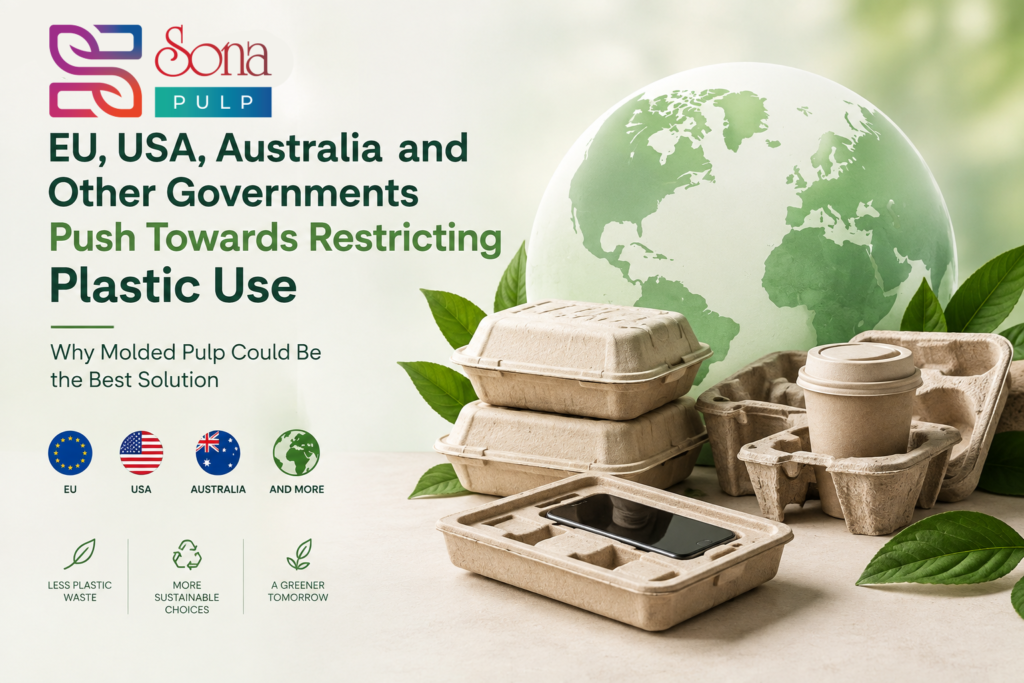
The global packaging industry is undergoing a major transformation. Governments across the EU, USA, Australia, and other regions are increasingly introducing measures to reduce plastic waste, particularly single-use plastics and packaging that is difficult to recover or recycle.
For businesses, this shift is creating an important question: What can replace conventional plastic packaging without compromising functionality, protection, or cost?
One of the most promising answers is molded pulp packaging.
The Growing Push to Reduce Plastic
Plastic has played an important role in modern packaging because it is lightweight, durable, versatile, and relatively inexpensive. However, the environmental impact of plastic waste has led governments and regulators to encourage businesses to reduce their dependence on conventional plastic packaging.
Restrictions, taxes, extended producer responsibility programs, recycling targets, and limitations on certain single-use plastic products are encouraging brands to rethink their packaging choices.
This is particularly important for industries such as food and beverage, electronics, cosmetics, consumer goods, and e-commerce, where packaging is used in large volumes.
The result is a clear movement toward materials that are renewable, recyclable, compostable, or easier to recover at the end of their useful life.
Why Molded Pulp Is Gaining Attention
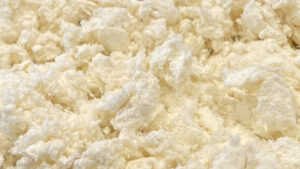
Molded pulp, also known as molded fiber, is produced by forming plant-based fibers into specific shapes and structures.
Depending on the fiber source and manufacturing process, molded pulp can be made from materials such as recycled paper, agricultural fibers, bamboo, bagasse, and other renewable fiber sources.
This makes it particularly attractive as an alternative to packaging components traditionally manufactured from plastic.
1. Plant-Fiber Based Alternative
Molded pulp can be manufactured using renewable fiber resources, providing brands with an alternative to fossil-fuel-based plastic packaging.
Its natural fiber structure also allows manufacturers to create packaging with different shapes, thicknesses, and protective features.
2. Designed for End-of-Life Recovery
One of the biggest advantages of molded fiber is its potential compatibility with established paper and fiber recovery systems, depending on the specific product, coatings, additives, and local recycling infrastructure.
Certain molded-pulp products can also be designed and certified for compostability where appropriate.
The important point is that end-of-life performance depends on the exact material formulation and applicable certification—not simply the word “pulp.”
3. Excellent Protection
Sustainable packaging does not have to mean compromising product protection.
Molded pulp can be engineered with:
- Protective corners
- Shock-absorbing structures
- Custom cavities
- Product holders
- Inserts
- Trays
- Stacking features
This makes it suitable for products ranging from consumer electronics and cosmetics to food products and industrial components.
4. Highly Customizable
Molded pulp can be designed around the product rather than forcing the product to fit a standard package.
Manufacturers can develop customized:
- Trays
- Inserts
- Clamshell-style structures
- Protective packaging
- Cup carriers
- Food containers
- Cosmetic packaging
- Electronics inserts
This design flexibility allows brands to replace specific plastic components while maintaining a premium presentation.
Plastic Replacement Is More Than an Environmental Decision
The transition away from plastic is not only about environmental responsibility.
It is also becoming a business and brand strategy.
Consumers increasingly pay attention to the materials used in the products they purchase. At the same time, brands are looking for packaging solutions that help them respond to changing regulations and sustainability expectations.
Switching to molded pulp can therefore help businesses work toward several objectives simultaneously:
Reduce plastic dependence → Improve packaging sustainability → Meet evolving market expectations → Strengthen brand positioning
Is Molded Pulp the Best Solution for Every Application?
Not necessarily.
There is no single packaging material that is ideal for every product. The right solution depends on factors such as:
- Product requirements
- Moisture and temperature exposure
- Required shelf life
- Mechanical protection
- Packaging format
- Recycling infrastructure
- Composting availability
- Applicable regulations
- Product cost
- Transportation requirements
For some applications, molded pulp can be an excellent replacement for conventional plastic. In others, a hybrid or different material may be more appropriate.
The key is to design packaging around the complete product lifecycle rather than simply replacing one material with another.
The Future of Packaging Is Moving Toward Fiber
As governments, brands, and consumers continue to focus on plastic waste, packaging manufacturers will need to develop solutions that combine performance, practicality, and environmental responsibility.
Molded pulp is well positioned within this transition because it can provide structural protection, design flexibility, and fiber-based material options for a wide range of applications.
For companies looking beyond conventional plastic, molded pulp represents more than an alternative material—it represents an opportunity to rethink how packaging is designed, manufactured, used, and recovered.
Sona Pulp: Creating the Next Generation of Packaging
At Sona Pulp, we believe the future of packaging lies in combining innovative design with responsible material choices.
By developing molded pulp solutions for different industries and applications, we aim to help brands move toward packaging that delivers the protection they need while reducing unnecessary dependence on conventional plastic.